

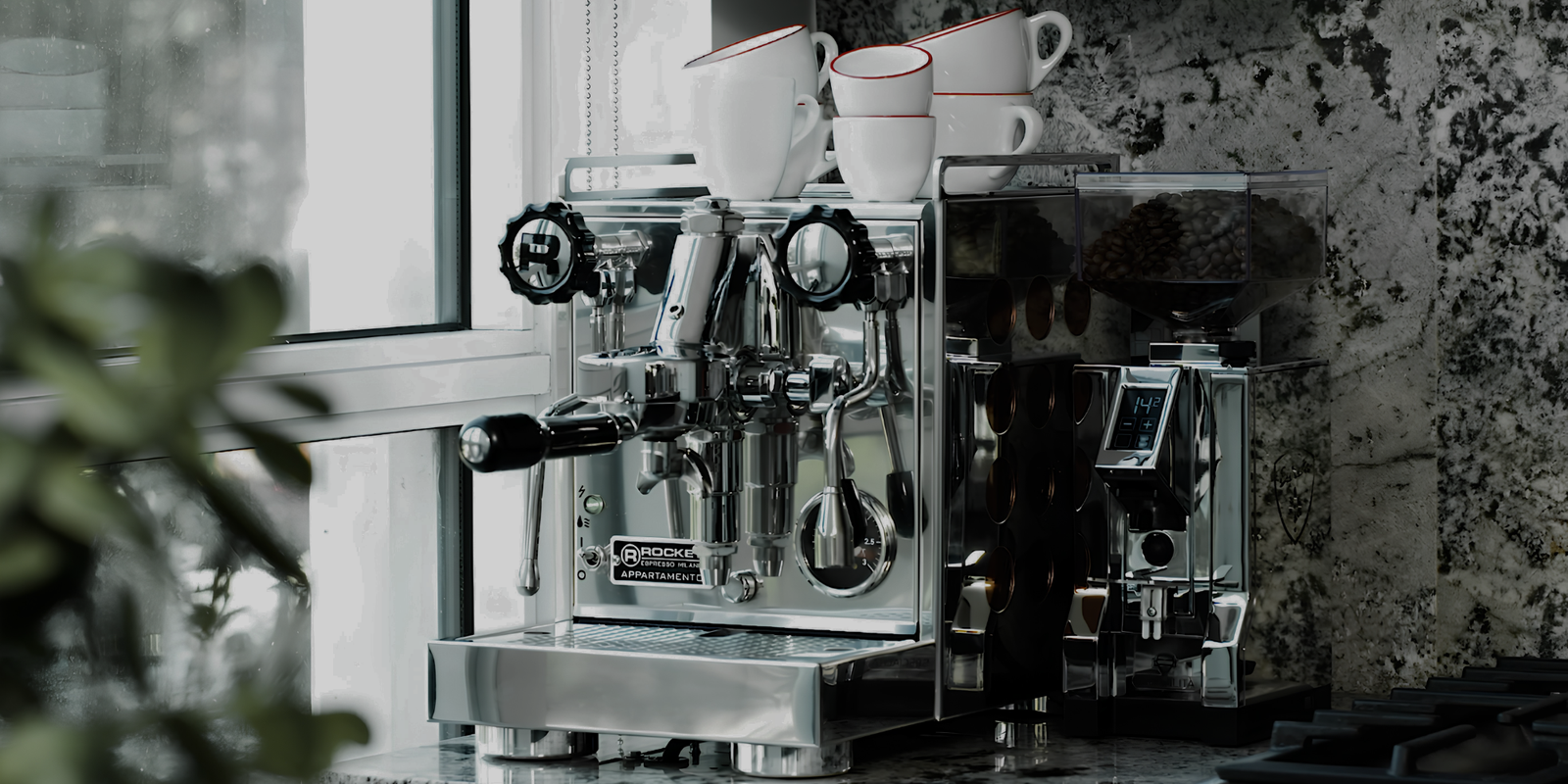
Yes. The Specialita single doses fine — it just wasn't designed for it, and the stock hopper is the reason people find it frustrating. That's a $39 problem, not a buy-a-different-grinder problem.
Here's what actually changes, what to buy, and when you'd genuinely be better off with a different grinder.
What single dosing is for
Single dosing means weighing exactly the beans you need for one shot, grinding them, and getting all of them back. No hopper full of coffee sitting out, no leftovers in the grinder.
Two real benefits:
- Freshness. Beans aren't sitting in a clear plastic hopper oxidizing under kitchen lights for two weeks.
- Switching coffees. If you keep a light roast and a decaf on the go, you're not purging half a hopper every time you change.
And one thing it doesn't do: single dosing does not by itself make your espresso taste better. It makes your workflow cleaner and your beans fresher. Plenty of excellent espresso comes off hoppered grinders.
Why the stock Specialita fights you
The Specialita was built around a hopper. Beans sit above the burrs, gravity feeds them down, and there's always more coffee behind what's being ground.
Drop in exactly 18 grams and two things happen. The last few grams have nothing pushing them into the burrs, so they sit there. And grounds cling inside the chute with no following dose to sweep them out. You weigh 18g in and get something like 16.5g out — then those grounds arrive stale in tomorrow's shot.
That's the whole problem. It isn't a flaw in the grinder; it's a grinder being asked to do a job it wasn't designed for.
The $39 fix

Eureka makes a single dose hopper for the Mignon range — $39, and it's the single thing that makes this work properly.
It replaces the tall bean hopper with a short one, and the bellows lets you push a puff of air through the burrs after grinding. That air pushes the retained grounds out of the chute, which is the part you can't solve with technique alone.
If you'd rather keep the standard hopper for normal use, the Eureka Short Hopper at $70 is a middle option — smaller bean capacity, less oxidation, and it swaps back easily.
Buy the single dose hopper first. Everything below assumes you have one.
How to do it
1. Weigh your beans. 18g is the standard double. This is the entire point — if you're not weighing, you're not single dosing, you're just putting a small amount of coffee in a grinder. Any scale accurate to 0.1g works; the LUCCA Precision Scale at $70 does the job, and the Acaia Lunar at $250 is the one people buy when they want it to also live under the portafilter.
2. Spritz the beans (RDT). One spray of water from a cheap mister, stirred through with your finger. This is the Ross Droplet Technique and it dramatically cuts static — which means less clumping, less retention, and no grounds leaping onto the counter. Any $5 spray bottle works; there's nothing special to buy.
Skip this and you'll fight static forever, especially with new burrs that haven't broken in.
3. Run the grinder as you add the beans. Start it first, then drop them in. If your Specialita has a manual or continuous mode, use it; otherwise set a timed dose longer than you need, so the burrs don't stop while there's still coffee in them.
4. Bellows, twice. Once the grinding noise stops, give the bellows two firm pumps. You'll see the last of the grounds come through. This is the step that turns "mostly single dosing" into actually getting your 18 grams back.
5. Weigh what came out. For the first week, check. You want out to match in within about 0.2g. If you're consistently down a gram, you're not bellowing hard enough or the beans need the RDT spritz.
6. WDT before you tamp. Single-dosed coffee clumps more than hoppered coffee, because you've usually just sprayed it and it's fallen a short distance into a dosing cup. Stir it out with a WDT tool ($45) before tamping — otherwise you've fixed retention and introduced channeling.
What you actually need, and what you don't
You'll see elaborate single-dosing setups — James Hoffmann's videos showing a Specialita being single dosed are probably why you're reading this. Most of that gear is optional.
Genuinely needed:
- A single dose hopper with bellows — $39
- A scale that reads 0.1g
- A spray bottle — any of them
Worth having:
- A WDT tool ($45), because single-dosed grounds clump
- A dosing funnel so grounds land in the basket rather than on the counter — the LUCCA funnel is $30, the Eureka Mignon funnel $55
- A bottomless portafilter ($79.95), so you can see whether any of this is working
Not needed to single dose: a calibrated tamper, a dosing cup, a puck screen, a paper filter under the puck. All fine things. None of them have anything to do with single dosing, and buying them won't fix retention.
When to buy a different grinder instead
Straight answer, since we sell the Specialita: if single dosing is your main reason for buying a grinder, buy one built for it. Modifying a hopper-fed grinder into a single doser works, but you're spending $39 to partly solve something other grinders solve by design.
The ones we'd point you at:
- Eureka Mignon Zero — $329, the same family, designed from the start for single dosing
- Turin DF64 Gen 2.7 — $354, 64mm flat burrs, the category's volume seller
- Turin DC63 — $398, if you want conical burrs and more body in the cup
If you already own the Specialita, none of that applies — buy the $39 hopper and get on with it. If you're choosing now and single dosing matters to you, start with one of the three above.
Browse grinders · Browse accessories
Frequently asked questions
Can you single dose with a Eureka Mignon Specialita?
Yes. It wasn't designed for it, so the stock hopper leaves grounds in the chute and gives you back less than you put in. Eureka's single dose hopper with bellows costs $39 and solves it — after that the workflow is weigh, spritz, grind, bellows twice.
Do I need a bellows to single dose?
Effectively, yes, if you want your full dose back. Technique alone won't clear grounds from the chute on a grinder built around a hopper. The bellows pushes air through the burrs and moves them out, which is the difference between getting 16.5g back and getting 17.9g.
Does single dosing make espresso taste better?
Not directly. It keeps your beans fresher and makes switching between coffees painless, both of which can improve the cup indirectly. But a hoppered grinder with fresh beans makes excellent espresso, and single dosing won't rescue a bad shot.
What is RDT and does it work?
The Ross Droplet Technique — a single spray of water on your beans before grinding, stirred through. It works, noticeably. Grinding generates static, static causes clumping and grounds flying about, and a tiny amount of moisture prevents most of it. Any cheap spray bottle does the job.
How much retention does the Specialita have?
Low when used as designed with a hopper, because there's always coffee behind what's leaving. Single dosing without a bellows hopper typically costs you around a gram or more per dose, and that coffee turns up stale in the next shot.
Is the Mignon Zero better for single dosing than the Specialita?
Yes, and it's cheaper at $329. It's the same Eureka family designed around single dosing from the start rather than adapted to it. If you already own a Specialita the $39 hopper is the sensible move; if you're choosing now and single dosing is the goal, start with the Zero.
Do I still need a WDT tool if I single dose?
More than before, actually. Single-dosed grounds clump more — you've usually just sprayed the beans and the grounds have dropped a short distance into a cup. Stirring with fine needles before tamping stops that turning into channeling.
The short version
Buy the $39 Eureka single dose hopper. Weigh 18g, spritz the beans, start the grinder before adding them, bellows twice, then WDT before tamping. Weigh the output for a week to check you're getting it all back.
And if you don't own the grinder yet and single dosing is the whole reason you're asking — buy a single doser instead. Call us at 800-410-8867 and we'll tell you which.