

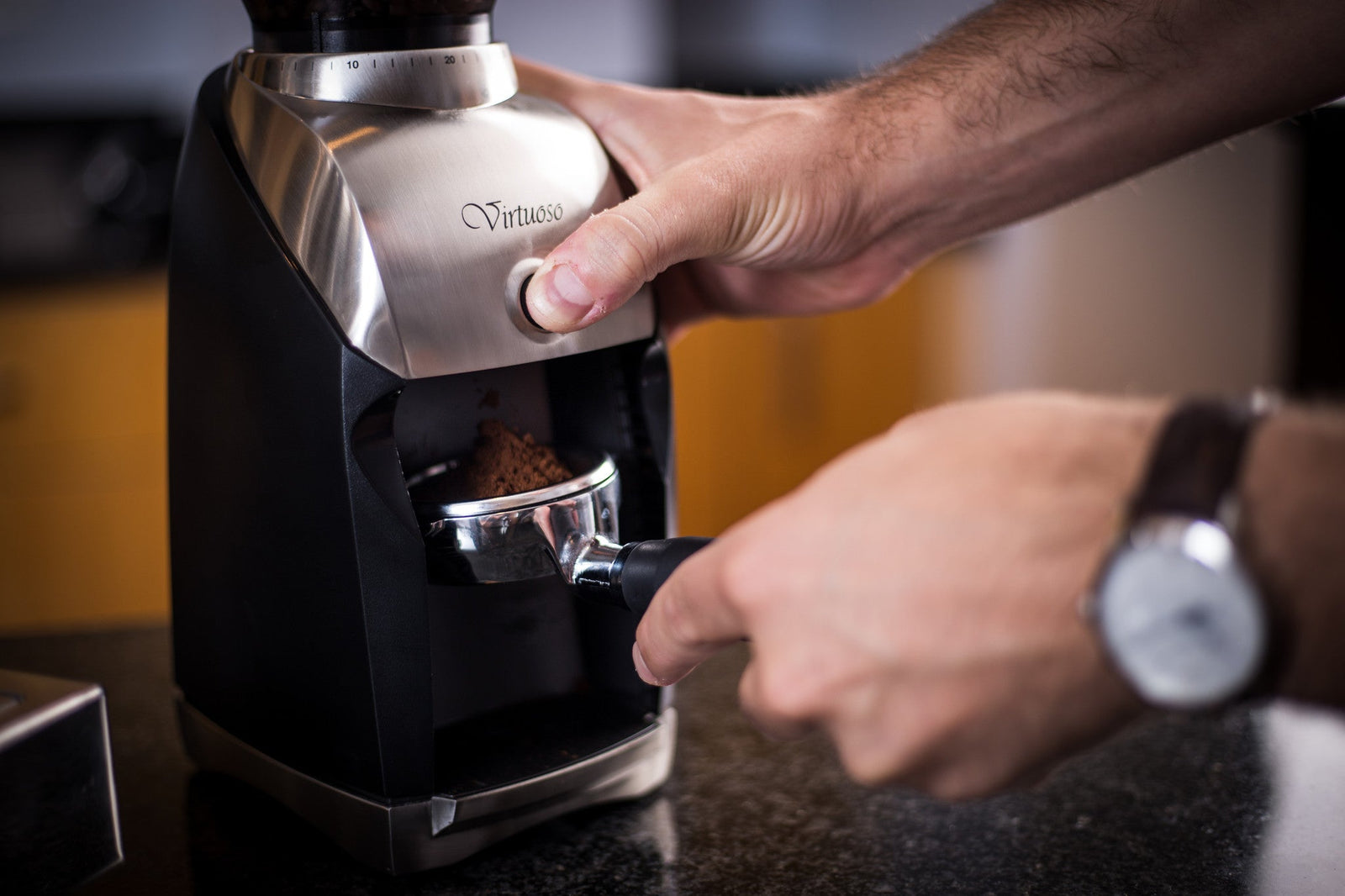
Watery espresso is almost always the grind. If a double shot pours in under 20 seconds, the grind is too coarse and water is finding its way through the puck instead of soaking it. Grind finer in small steps until a 36g shot takes 25–30 seconds. Dose, tamp, temperature and bean freshness are the next four things to check, in that order.

6 Reasons Why Your Espresso Is Watery
There are several reasons why your espresso may be extracting watery:
1. Your Grind Needs Adjustment
If your grind is too coarse, the water will flow too quickly through the grounds, producing a weak and watery shot.
Solution - adjust your grind to the fine side slowly. Always make sure you're adjusting your grinder as it's in operation. Failing to do this can lead to jamming.
This is also where a good coffee grinder earns its money. A grinder that cannot hold a setting, or that adjusts in steps too large for espresso, will give you a watery shot one morning and a choked one the next with nothing changed in between.

Espresso requires a very fine grind. If your espresso is pouring out like water, the first step you should take is adjusting your grind (in small increments) to the finer side.
2. Your Dosage Is Off
If the dose of coffee used is too low, the water will flow too quickly through the grounds and produce a weak shot.
Solution - increase the amount of coffee your putting in your portafilter. Start in increments of 0.50 grams and work you way up.
Consider getting a high quality coffee scale to help weigh your dosages to the exact amount every time. Without one you are guessing, and no advice on this page is reproducible if you cannot measure what you changed.

Dosages may need to be tweaked every time you get a fresh bag of coffee.
3. You're Not Tamping Hard Enough
If the tamping pressure is too light, the water will flow too quickly through the grounds and produce a weak shot.
Solution - increase your tamping pressure ever so slightly. If you now start seeing your espresso barely extract, you're tamping too hard.
Consistency matters more than force here. The same pressure every time, level across the puck, beats leaning on it — an uneven tamp lets water find a channel down one side, which produces exactly the watery shot you are trying to fix.
Consider getting yourself a new tamper. Most tampers that come with espresso machines are of extremely poor quality.

4. The Temperature of Your Water Isn't Ideal
If the water temperature is too low, the extraction will be slow, resulting in a weak and watery shot.
Solution - increase boiler temperature (if possible).
Give the machine a full warm-up before you judge this. Most espresso machines need 20–30 minutes to bring the group head up to temperature, not just the boiler, and a cold group will produce a thin shot no matter what the display says.
5. Your Coffee Isn't Fresh
If the coffee is old or stale, it will not extract properly, producing a weak and watery shot.
Solution - don't buy coffee that was roasted over 30 days ago. Ideally, your coffee would have been roasted about 6 days ago and will be ground directly before making espresso. Avoid buying pre-ground coffee entirely.
Look for a roast date on the bag, not a best-before date. A twelve-month best-before tells you nothing about when the coffee was roasted, and supermarket bags are almost always months old. We've partnered with some of the best roasters who ship their own blends if you want a straightforward place to start.
6. Your Espresso Machine May Need a Tune-Up
If the espresso machine has not been properly maintained, the water pressure may be too low, causing a weak and watery shot.
Solution - inspect the group head for wear and tear - you may need a new gasket, screen, etc. Inspect your portafilters - they may need a good cleaning!
Scale is the usual culprit behind a machine that has quietly lost pressure, and it builds silently for years before anything obvious happens. It takes a test strip and a minute to check where your water sits.
If you only change one thing
Weigh the coffee in and the espresso out. 18g in, 36g out, 25–30 seconds is the starting point almost everyone should use. Without a scale you cannot tell which of the six things above you actually changed, and every fix on this page becomes guesswork.
Questions we get
Why is my espresso watery?
Most often the grind is too coarse, so water passes through the puck faster than it can extract. If a double shot pours in under 20 seconds, grind finer in small steps until 36g takes 25–30 seconds.
How long should an espresso shot take?
25 to 30 seconds for a double, producing around 36g of espresso from an 18g dose. Faster than that and the shot will taste thin and sour; much slower and it turns bitter.
Should I grind finer or use more coffee for watery espresso?
Grind finer first. It has the larger effect and it is free. Change one variable at a time, pull a shot, and taste it before changing anything else.
Can a bad grinder cause watery espresso?
Yes, and it is the most common hidden cause. A grinder whose adjustment steps are too large for espresso leaves you choosing between a shot that gushes and one that chokes. Grinders built for drip coffee cannot grind fine enough or adjust finely enough for espresso.
Does tamping harder fix watery espresso?
Only slightly, and it is not where the problem usually is. Consistent, level tamping matters far more than force — an uneven tamp lets water channel down one side of the puck, which produces a watery shot regardless of how hard you pressed.
Why is my espresso watery with fresh beans?
Very fresh coffee, under about five days off roast, still carries a lot of CO2, which disrupts the flow through the puck. If the beans were roasted in the last few days, let them rest and grind slightly finer in the meantime.